ServicesSolar Repair
Solar Repair in Irving
When your panels stop pulling their weight, we find out why. We test the system, show you what failed and explain your options before anything gets replaced. Then we fix it, confirm it is producing again, and leave your yard and roof the way we found them.
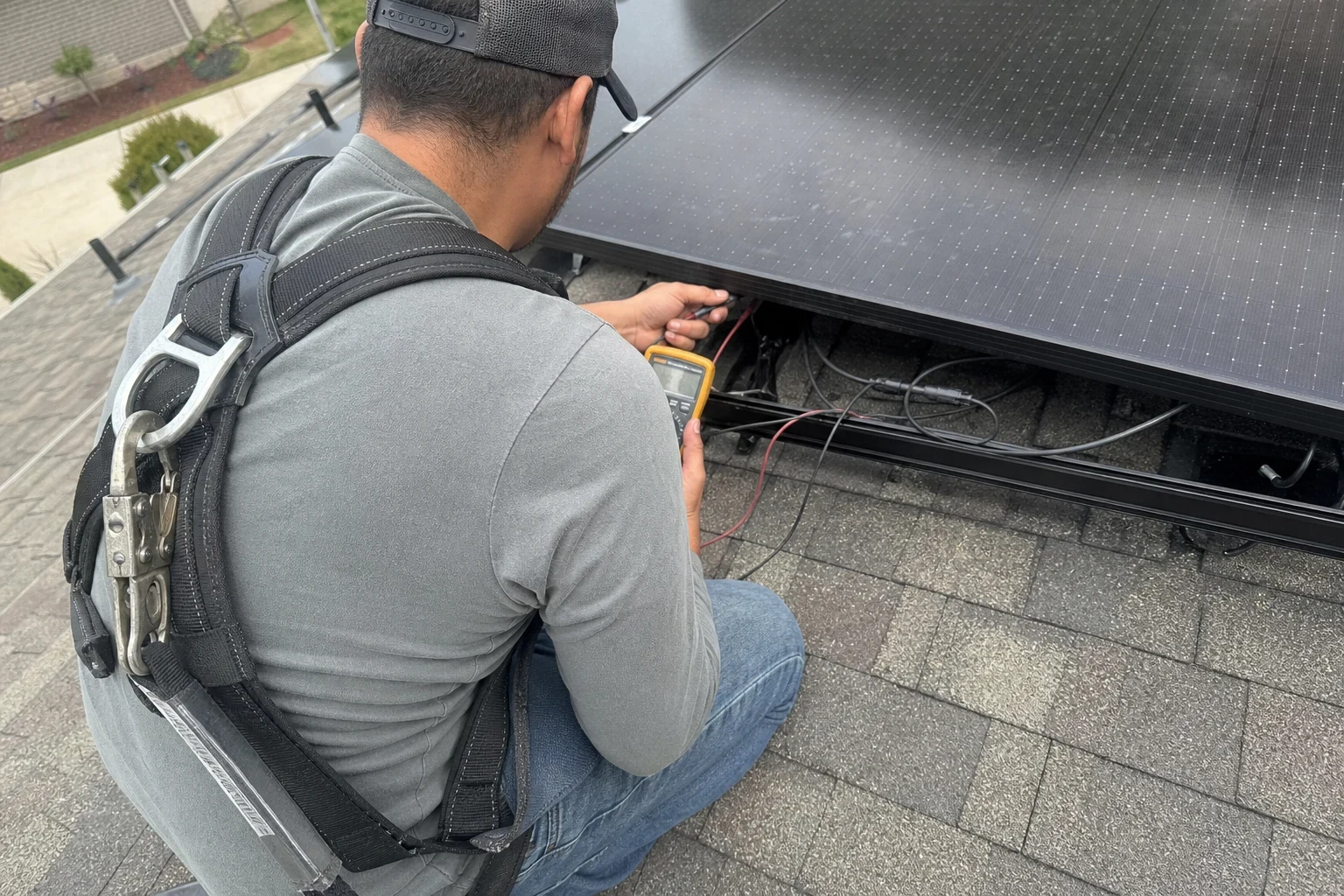
Getting a stalled system back to work
A solar system that quietly underperforms costs you money every sunny day. Most problems come down to a short list: an inverter that has faulted or worn out, a loose or corroded connector, a damaged panel, or wiring chewed by squirrels and birds nesting underneath the array.
We repair systems we installed and systems someone else put in. Either way, we treat it like we would a neighbor's house. You get a straight answer about what is wrong, what it takes to fix, and whether a repair makes more sense than replacing a part.
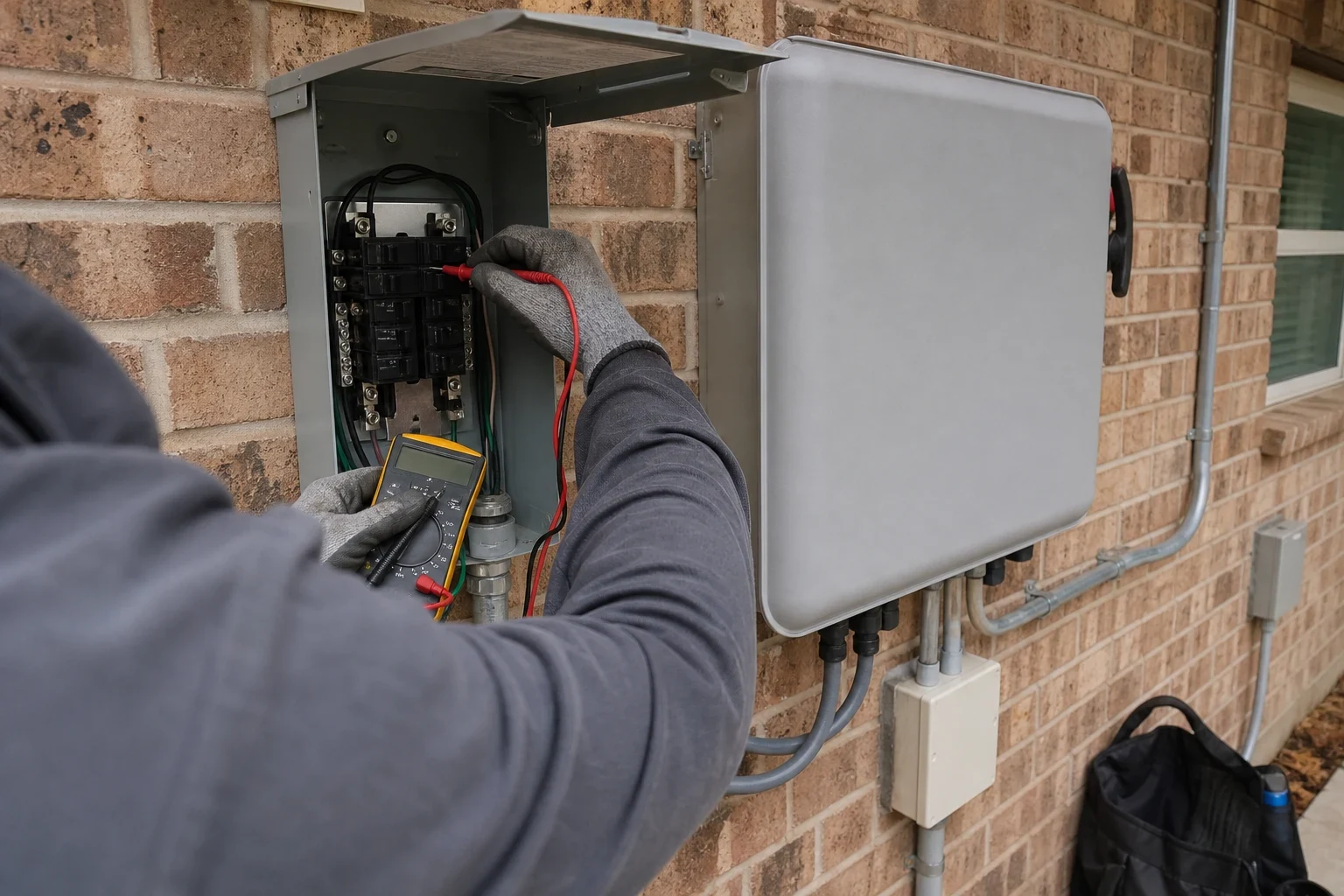
What a solar repair visit covers
- 01
Inverter and optimizer checks
We read the error codes and production logs, then test the inverter, microinverters or optimizers to see which one is failing. Inverters are the most common weak point, so we start there.
- 02
String and wiring tests
We meter each string to find voltage drops, open circuits and ground faults. Corroded MC4 connectors and sun-cracked wire jackets show up here.
- 03
Panel inspection
We look for cracked glass, hot spots, browned cells and delamination. After a hailstorm, this is where hidden damage turns up.
- 04
Critter damage and guarding
Nests under the array trap heat and chewed wires cause shorts. We clear them out, repair the wiring and can add mesh guarding to keep animals from coming back.
- 05
Monitoring reconnection
Sometimes the system is fine and the monitoring has simply dropped off your Wi-Fi. We get it reporting again so you can see real numbers.
Questions about Solar Repair?
Call(972) 954-1315Signs your system needs a repair
Production has dropped
Your monitoring app shows lower output than the same month last year, even on clear days. A steady slide often points to one weak string or a failing inverter.
A red or amber light on the inverter
Warning lights and error codes mean the inverter has shut down or limited itself. Write down the code if you can and share it on the phone.
Your electric bill crept back up
If nothing changed in how you use power but the bill rose, the panels may be sending less to your home than they should.
Visible damage after a storm
Cracked glass, a shifted panel or debris lodged under the array after a North Texas storm is worth checking before water and heat make it worse.
A tripping breaker or burnt smell
A solar breaker that keeps tripping or a scorched smell near the inverter or disconnect needs attention soon. Leave the system off until we have looked at it.
How a repair visit goes
- 1
A quick phone conversation
Tell us what you are seeing, what equipment you have and roughly how old it is. That helps us bring the right test gear and likely parts.
- 2
Diagnosis on site
We shut the system down safely, test the inverter, strings and panels, and take photos of anything we find. Most of the work happens outside, so you do not need to rearrange your day.
- 3
Your options in writing
We walk you through the photos and give you a written estimate with each part and task listed. If a repair is not worth it, we tell you.
- 4
The fix and a final check
Once you approve, we make the repair, bring the system back online and confirm production in the monitoring. We pick up old parts and packaging before we leave.
What changes the price of a solar repair
Repair prices swing more than install prices, since the trouble might be one connector or an entire inverter. We pin down the cause before we price anything, so you pay for the real fix and not for guesswork. These are the main things that shift the cost.
- Which part broke
- Tightening a loose connector is quick work. Swapping out a string inverter or a few damaged panels takes much more.
- Warranty from the maker
- Inverters and panels often come with their own manufacturer warranties. When your part is still under one, it may cost you little or nothing, and we help you pull together what the manufacturer needs.
- Reaching the panels
- Steep pitches, second-story roofs and panels that have to be lifted off to get at the wiring below all take extra time and care.
- Equipment no longer made
- When your model is out of production, we track down a compatible part, and that can change what you pay for parts and labor.
Solar repair questions
Will you repair a system another company installed?
Yes. Plenty of homeowners call us because their original installer moved on or closed. We work on most common panel and inverter brands and will tell you up front if your equipment needs a specialist part.
Should I repair my inverter or replace it?
It depends on its age and what failed. A newer inverter with a single bad component is often worth fixing, while an older one near the end of its life usually is not. We show you the numbers both ways and let you decide.
Does hail damage get covered by homeowners insurance?
Often it does, but that is up to your policy and your adjuster. We document the damage with photos and a written repair estimate you can share with your insurer. We do not act as the adjuster, and we will not inflate a claim.
Is it safe to turn my system off myself?
Most systems have a labeled disconnect near the inverter or meter, and switching it off is safe. Do not open panels, touch wiring or climb onto the roof. If you smell burning, turn it off and keep everyone clear until we arrive.
Could dirty panels be the problem instead?
Sometimes. Heavy dust and pollen can cut output noticeably, but they rarely trigger error codes. If testing shows the equipment is fine, we will say so and point you to our panel cleaning service instead of selling a repair.
Let's find out what is wrong with your system
Describe what your panels or inverter are doing, and we will tell you what we would check first. We serve Irving and nearby towns including Coppell, Grand Prairie and Carrollton.