ServicesRoof-Mounted Solar
Roof-Mounted Solar in Irving
We put solar panels on your roof the careful way. Every mount is sealed, every wire is tucked out of sight, and your shingles get treated like they were on our own house. You'll see where each panel goes before we start.
Is your roof a good place for solar?
Roof-mounted solar is the most common way to add panels to a house. The roof is already up high, out of the way and usually facing somewhere useful. South- and west-facing slopes do most of the work, and east-facing roofs can still pull their weight. A shaded roof, or one crowded with vents and valleys, may fit fewer panels than you expect. We'll tell you that up front.
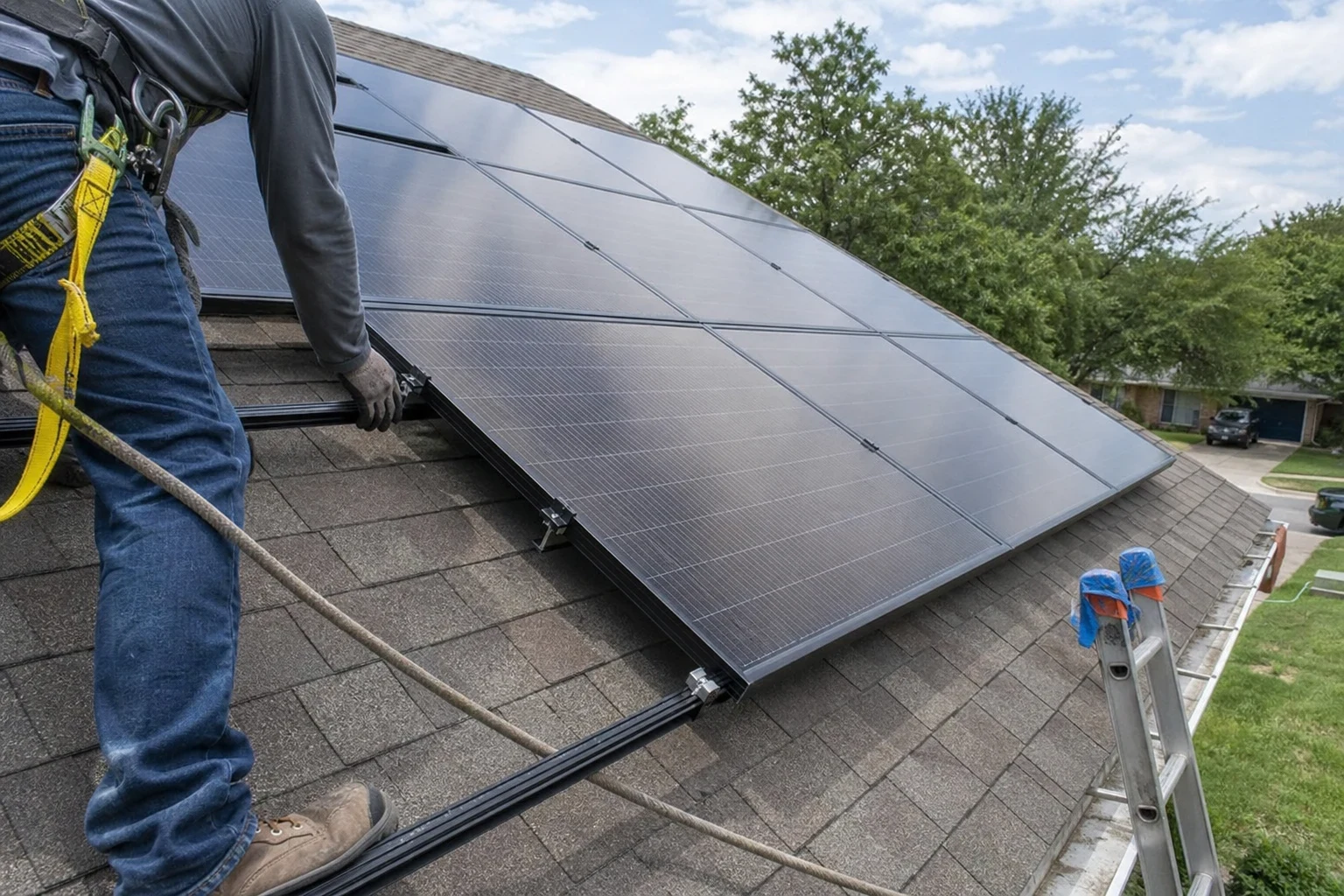
The part most people worry about is the holes. Every attachment goes through your shingles and into a rafter, so how that spot is sealed matters for decades. We flash each mount, seal it and fasten it into solid wood, not just the roof deck. Done that way, your roof keeps shedding rain the way it did before.
Roof age matters too. If your shingles are near the end of their life, it usually makes sense to replace the roof first so the panels don't have to come off in a few years. We'll give you an honest read, and you can bring in the roofer of your choice.
What the work includes
- 01
Roof and attic check
We walk the roof, look at shingle condition and hail wear, and go into the attic to locate rafters and spot soft decking. You get photos of anything we find.
- 02
A layout that works around your roof
We plan the array around plumbing vents, skylights, valleys and shade from trees. You see a drawing of where each panel sits before anything is ordered.
- 03
Flashed, rafter-fastened mounts
Each mount gets a flashing that slides under the shingle course above it, plus sealant, and is fastened into a rafter. No bare holes and no sealant-only shortcuts.
- 04
Level racking and panels
Rails go on straight and square so the array looks clean from the street. Panels sit with an air gap underneath, which helps them run cooler through a long Texas summer.
- 05
Wiring you won't see
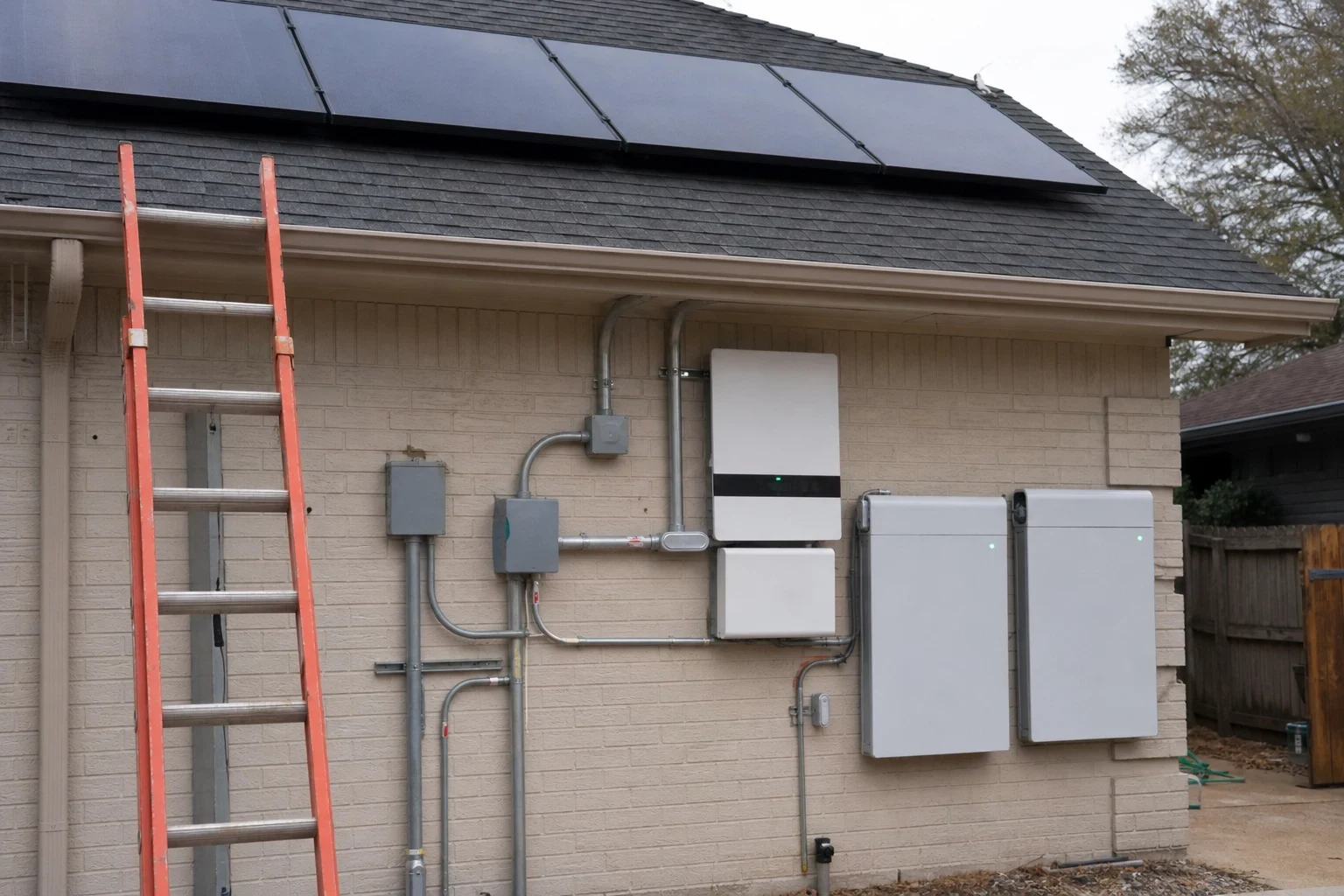
Roof wiring is clipped up under the panels instead of lying on the shingles. Conduit takes the shortest, least visible path down to your inverter and electrical panel.
- 06
Permit and utility paperwork
We pull the permit, meet the inspector and handle the interconnection application with your utility, so your system is turned on the right way.
Questions about Roof-Mounted Solar?
Call(972) 954-1315Signs roof-mounted solar fits your home
Your roof sees sun most of the day
A south or west slope without heavy tree cover is the best starting point. Even partial shade can work with the right panel layout.
Summer bills are the painful ones
Air conditioning runs hard from late spring into fall. Panels make the most power on those same long, bright days, so the savings land when you need them.
Your shingles have plenty of life left
Panels stay up for a long time. A roof in good shape is the ideal base.
You'd rather keep your yard
Ground-mounted arrays take up lawn space. Putting panels on the roof leaves the backyard for the kids, the dog and the grill.
A new roof just went on
If you've recently replaced your roof, this is a good time to add solar. Fresh shingles and new mounts start their lives together.
How the job runs, start to finish
- 1
A visit and an honest assessment
We look at the roof, the attic and your electrical panel, and we ask about your power bills. You get a written estimate that lists each part of the job, and no pressure to sign that day.
- 2
Design and permit
Once you say yes, we finalize the layout, apply for the city permit and handle the interconnection paperwork with your utility. We let you know when approvals come back so you're never left guessing.
- 3
Install day
Most residential roofs take a day or two of work, and we'll tell you the plan for yours ahead of time. We protect walkways and flower beds, keep ladders and materials tidy, and sweep the yard for screws and scraps before we leave.
- 4
Inspection and turn-on
The city inspects the work, then the utility approves the connection. We show you the monitoring app and what normal output looks like, so you can spot a problem early.
What moves the price
Every roof is a little different, so your price comes from your roof and your goals, not a chart. We put each line in writing so you can see exactly where the money goes. These are the things that make the biggest difference.
- System size
- More panels cost more up front. We size the system to your actual usage rather than selling you the biggest array the roof can hold.
- Roof pitch and height
- Steep or two-story roofs need more safety gear and more time on the ladder, which adds labor.
- Roof material
- Composition shingle is the most straightforward to work on. Tile and some metal roofs need different mounting hardware and more care.
- How many roof faces
- An array split across several slopes needs extra rails, wiring and labor compared with one clean rectangle.
- Your electrical panel
- Some older panels don't have room to accept solar and need an upgrade. We check this on the first visit so it isn't a surprise later.
What homeowners ask about roof solar
Do roof panels cause leaks?
Not if the mounts go in right. We tuck flashing under the shingles above each one, seal it and screw it into a rafter, so rain flows past rather than inside. Most leaks trace back to mounts that relied on caulk alone or missed the rafter, and those are the shortcuts we don't take.
Is my roof strong enough for panels?
Most are, because the load is shared across many attachment points. Before any design work, we go into the attic and look at the rafters and decking. If we find soft or undersized wood, we'll point it out and go over the choices with you.
Will panels survive North Texas hail?
Panels are made with tempered glass and go through impact testing, and they frequently ride out storms that ruin shingles. Extra-large hail can still break one. Ask your homeowners insurance how the system is covered, and we can tell you which questions to bring up.
What if the roof needs repairs down the road?
We can take the panels off and put them back. We pull the array, your roofer handles the roof, and we reinstall everything with fresh flashing at every mount.
Will my roof panels need cleaning?
Rain takes care of much of it, but in dry spells dust, pollen and bird droppings collect and lower output. If production falls off for no obvious reason, our panel cleaning service is an easy place to start.
Let's take a look at your roof
Tell us a bit about your home and your power bills over the phone, and we'll set up a visit to see what your roof can handle. You'll get straight answers and a written estimate, the way you'd want a neighbor to treat you.